April 7, 2026 • Mara Voss • 10 min reading time • Prices verified June 5, 2026
First-Time Alternative Metal Buyer: A Plain-English Metal Comparison Before You Click Add to Cart
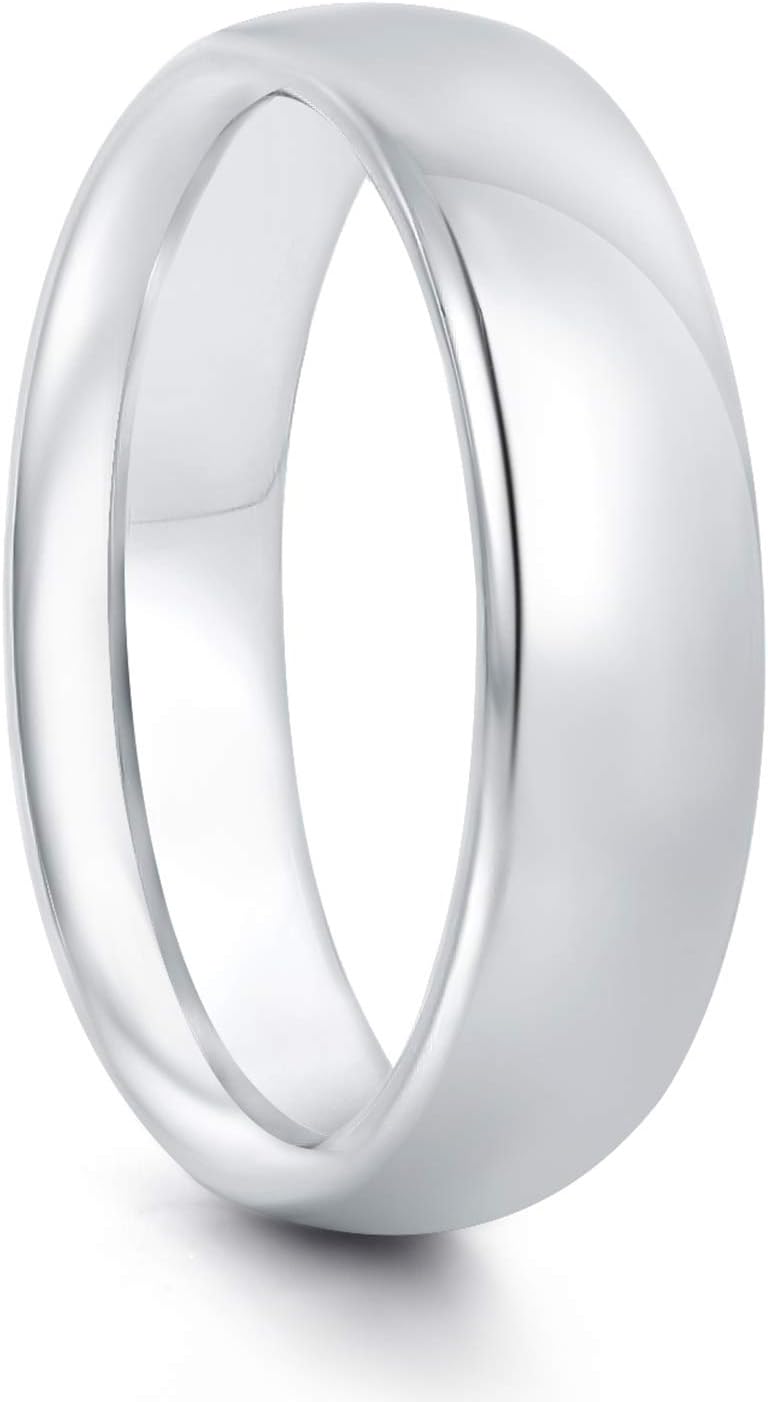
If you’ve started shopping for a wedding band and immediately ran into words like tungsten carbide, Mohs hardness, or Damascus steel, you’re not alone — and you don’t need a metallurgy degree to make a good decision here. What you need is a plain breakdown of what these metals actually do on your hand, day after day, and what happens when something goes wrong. This guide covers the five metals you’ll see most often in the alternative-metal wedding band market — stainless steel, titanium, tungsten carbide, cobalt chrome, and Damascus steel — with honest trade-offs on durability, cost, resizing, and failure modes. By the end, you’ll have a clear decision rule for your specific situation, whether you’re working with a $25 budget or commissioning a $500 hand-finished piece.
| EDITOR'S PICK[Accents Kingdom 8mm Men's Class…](https://www.amazon.com/dp/B00PMS6FTK?tag=greenflower20-20) | Mid-tier[King Will Tungsten Men's Weddin…](https://www.amazon.com/dp/B00KAP1C3Y?tag=greenflower20-20) | Budget pick[TIGRADE 2mm 4mm 6mm 8mm 10mm Ti…](https://www.amazon.com/dp/B00CQ03G0S?tag=greenflower20-20) | |
|---|---|---|---|
| Width options | 8mm | 6mm to 10mm | 2mm 4mm 6mm 8mm 10mm |
| Material | Cobalt Chrome | Tungsten | Titanium |
| Shape | Dome | — | Dome |
| Finish | — | Matte | High Polished |
| Ring size | 12 | 10.5 | 3.5 |
| Price | $39.99 | $28.99 | $11.99 |
| See on Amazon → | See on Amazon → | See on Amazon → |
The Five Metals at a Glance
Before going deep on any single material, here’s a fast orientation. Hardness in the jewelry world is measured on two scales: the Mohs scale (a 1–10 scratch-resistance ranking, where diamond is 10) and the Vickers scale (a more precise engineering measure of resistance to permanent deformation under load). Both matter — but for different reasons. Mohs tells you how easily a surface scratches; Vickers tells you how well the metal handles concentrated impact.
By the numbers:
| Metal | Mohs Hardness | Vickers Hardness | Typical Price Range | Resizable? |
|---|---|---|---|---|
| Stainless Steel (316L) | ~5.5–6 | ~150–200 HV | $15–$60 | Yes |
| Titanium (Grade 5) | ~6 | ~300–400 HV | $40–$150 | Limited |
| Cobalt Chrome | ~8–9 | ~800–900 HV | $80–$200 | No |
| Tungsten Carbide | ~9–9.5 | ~1,400–1,600 HV | $30–$250 | No |
| Damascus Steel | ~5.5–7 (varies) | ~200–400 HV (varies) | $200–$700+ | Sometimes |
Hardness figures reflect published metallurgical data for jewelry-grade alloys; pricing reflects current U.S. retail as of May 2026.
Stainless Steel and Titanium: The Flexible Workhorses
These two metals share the same practical advantage: both can be worked with conventional jewelry and emergency tools, which matters more than most first-time buyers realize until it matters a great deal.
Stainless Steel (316L Grade)
The “316L” designation matters. It means the steel is a low-carbon, marine-grade alloy with molybdenum added to resist corrosion — the same specification used in surgical instruments, which is why you’ll see it marketed as “surgical steel.” The GIA (Gemological Institute of America), in its reference document “Alternative Metals for Jewelry,” notes that 316L stainless steel has sufficiently low nickel release to be considered hypoallergenic for most wearers, though people with severe nickel contact allergies should verify with a dermatologist before purchasing.
What you give up for the price: stainless steel sits at roughly 5.5–6 on the Mohs scale, which means it will accumulate surface scratches with daily wear. Those scratches are real, visible, and unavoidable if you work with your hands. The upside is that a polished stainless band can usually be re-polished by a jeweler for a small fee, returning it close to its original finish. Brides, in its “Complete Guide to Wedding Band Metals,” lists stainless steel as the entry point for couples who want durability without committing significant budget to a first ring — a reasonable framing for anyone still figuring out their ring-wearing habits. For a first band in the $15–$60 range, this is the metal that carries the least financial risk.
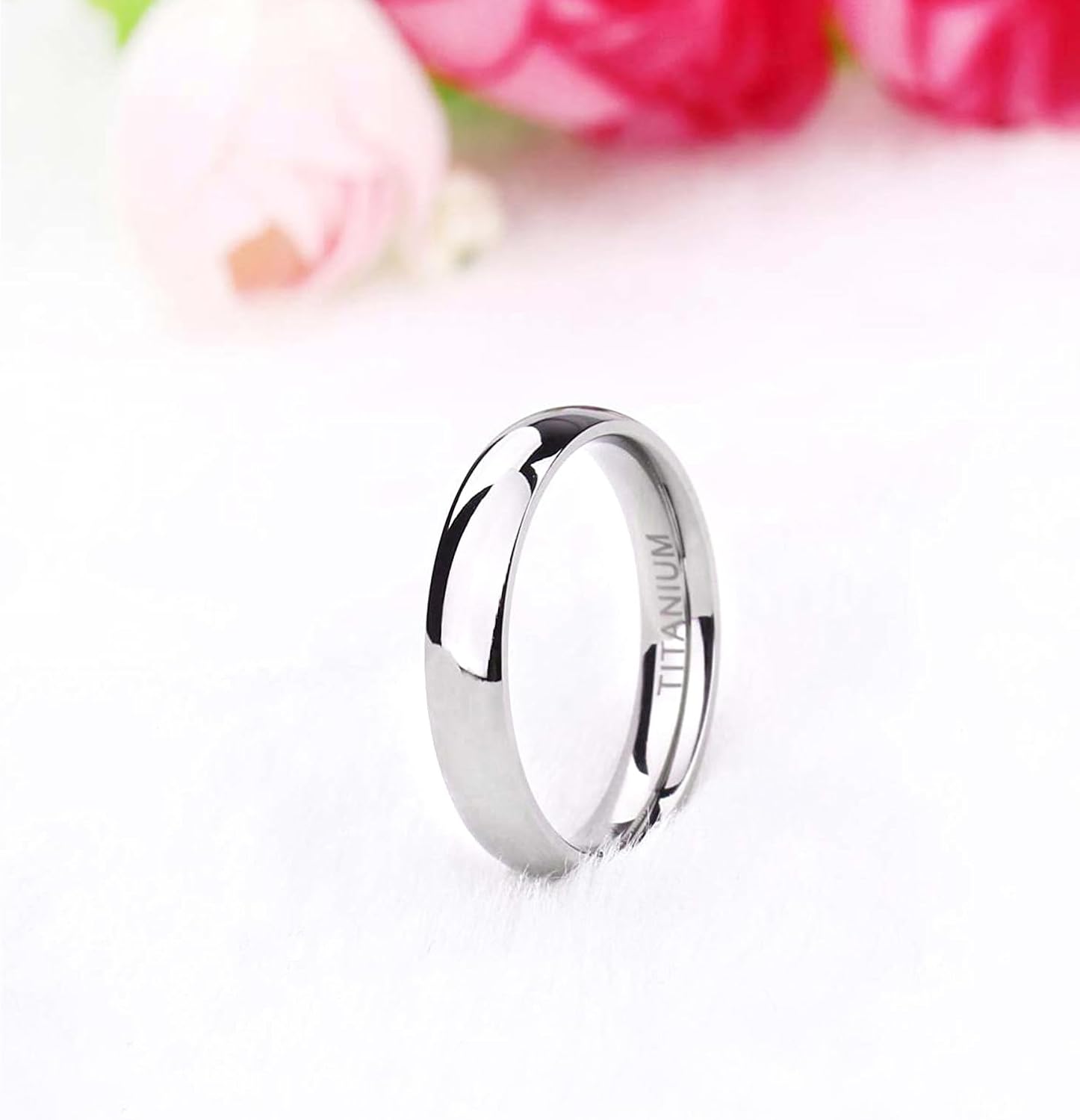
TIGRADE
$11.99
In stock on Amazon
Check price on AmazonTitanium (Grade 5 / Ti-6Al-4V)
Grade 5 titanium — an alloy containing aluminum and vanadium — is the aerospace-grade standard and what most reputable jewelers use. It’s roughly 45% lighter than steel at the same volume, which is immediately noticeable on the finger. The Knot, in its “Wedding Band Metals Guide,” consistently flags titanium as the preferred choice for wearers who find traditional metals too heavy, including people with arthritis or those unaccustomed to wearing jewelry daily.
The resizing caveat is real: most titanium bands can be sized down one to two sizes by a skilled jeweler, but sizing up typically requires ordering a new ring. If your finger size fluctuates seasonally — common in climates with dramatic temperature swings — factor that into the decision before finalizing a size. Titanium’s bend-before-break property also means that in a true emergency (finger swelling, injury), it can be cut with standard ring-cutting tools available in most emergency rooms, unlike tungsten carbide. That single fact is worth weighing carefully if you work in a hands-on trade.
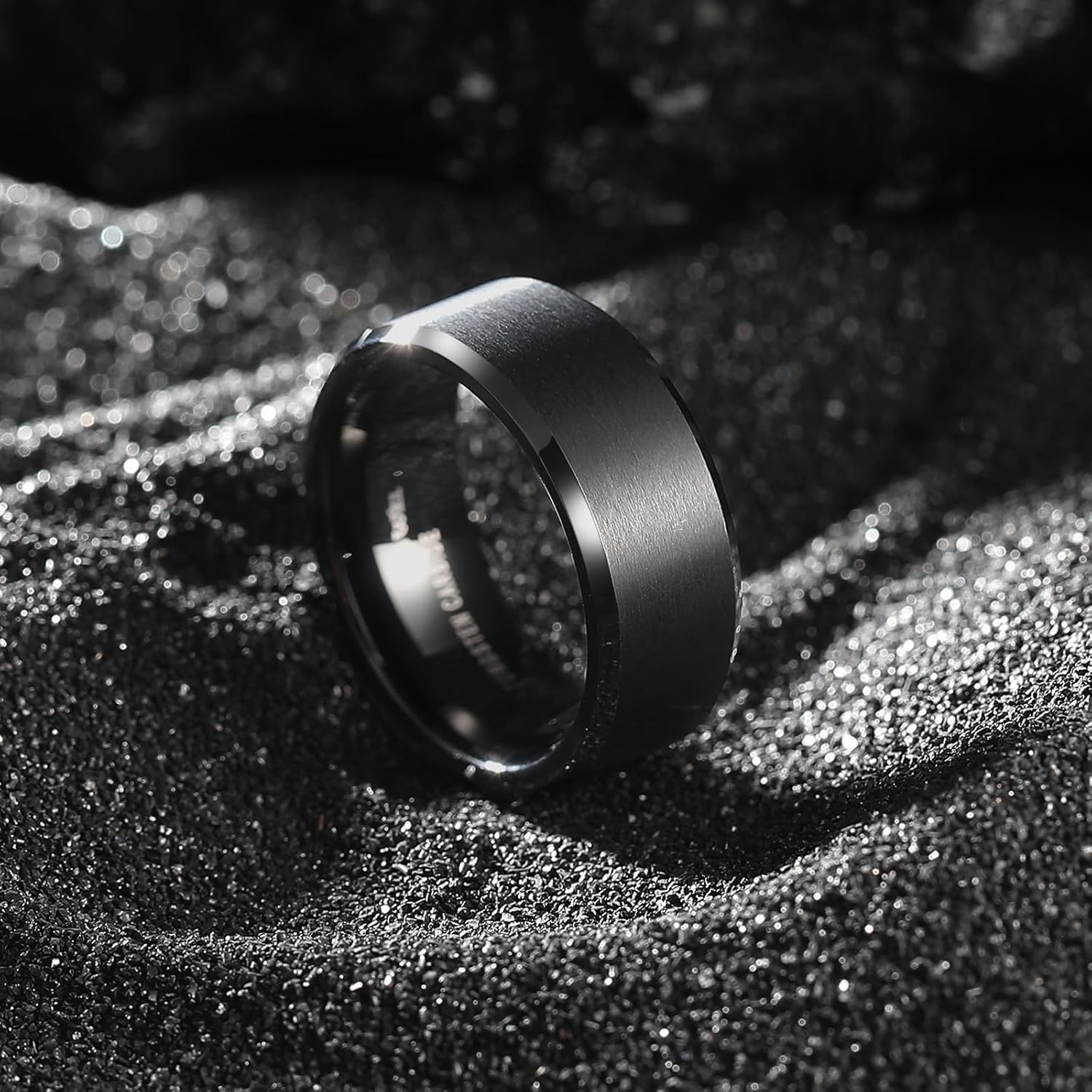
King
$28.99
In stock on Amazon
Check price on AmazonTungsten Carbide and Cobalt Chrome: The Scratch-Resistant Trade-Off
Here’s where the failure-mode conversation gets important, and where a lot of first-time buyers get surprised. Both metals offer exceptional scratch resistance — but they behave very differently under impact, and neither can be resized by a conventional jeweler.
Tungsten Carbide
Tungsten carbide — not pure tungsten, but a compound of tungsten and carbon sintered under pressure — sits at 9–9.5 on the Mohs scale. In practical terms, it is nearly impossible to scratch with anything you’ll encounter in daily life. A steak knife won’t touch it. A concrete floor probably won’t touch it. Wearers who do manual labor consistently report that tungsten bands look close to new after years of heavy use, a claim that tracks with trade reporting by JCK Online, which covers alternative metals extensively for the jewelry industry.
The trade-off is brittleness. JCK Online, in its piece “Cobalt Chrome and Tungsten: What Jewelers Need to Know,” explains that tungsten carbide’s extreme hardness comes at the cost of ductility — the metal cannot deform under impact. It shatters, cracks, or chips rather than bending. A hard strike against tile or granite at the right angle can fracture a tungsten band cleanly. This is a documented failure mode that any reputable tungsten retailer should disclose upfront, not in fine print.
The other non-negotiable: tungsten carbide cannot be resized. The sintering process that makes it so hard makes it impossible to cut and rejoin with standard jewelry tools. Most reputable brands offer lifetime size-exchange programs where you ship the ring back, pay a small handling fee, and receive the correct size. Read that policy before you buy; not every discount retailer offers the same terms.
One additional variable: some lower-cost tungsten bands use a cobalt binder in the carbide compound rather than a nickel binder. Cobalt binders have been associated with skin reactions in some wearers. If you have metal sensitivities, look for bands explicitly marketed as nickel-free and verify that claim in the product documentation, not just the listing headline.
King
$28.99
In stock on Amazon
Check price on AmazonCobalt Chrome
Cobalt chrome occupies an interesting middle position: nearly as scratch-resistant as tungsten (Mohs 8–9), but with meaningfully more impact resistance. It will not shatter the way tungsten can under a hard strike. It’s also naturally white in tone — closer visually to white gold or platinum than tungsten’s darker gray — which matters to buyers who want the look of a precious metal without the precious-metal price.
JCK Online’s coverage of cobalt chrome for the jewelry trade notes that the metal, as formulated for jewelry use, does not contain nickel and is considered hypoallergenic for most wearers. Jewelers Mutual, in its guidance document “Insuring Alternative Metal Rings,” places cobalt chrome in the same practical category as tungsten when it comes to post-purchase sizing: exchange programs are the realistic path, not jeweler alteration.
If you’re comparing tungsten and cobalt chrome at similar price points ($80–$200), the decision often comes down to one honest question: how likely are you to drop or strike the ring against a hard surface? For people who remove rings frequently — surgeons, cooks, mechanics — cobalt chrome’s shatter resistance is a meaningful advantage over tungsten. For people who never take their ring off and work in relatively low-impact environments, tungsten’s superior scratch resistance may be the better call.
King
$28.99
In stock on Amazon
Check price on AmazonDamascus Steel: The Specialty Tier
What Damascus Steel Actually Is
Damascus steel is not a single alloy — it’s a layering technique. A smith forge-welds multiple types of steel together (typically alternating high-carbon and lower-carbon layers), then folds, twists, and etches the billet to reveal the pattern created by the different alloys responding differently to acid. The result is the distinctive flowing, wood-grain-like visual pattern offered by specialty jewelers. Every Damascus band is, in that sense, genuinely one-of-a-kind. The pattern cannot be exactly replicated. This is the honest craft narrative that drives the $200–$700+ price point, and it’s a real differentiator — not marketing language.
What to Know Before Commissioning
Hardness varies by composition. The properties of a Damascus band depend on the specific steels used. A reputable jeweler should disclose the constituent alloys. Some Damascus rings are sealant-finished to slow oxidation; others are not and will develop a natural patina over time. Ask explicitly before ordering.
Resizing is sometimes possible, depending on the pattern complexity and band width, but intricate patterns may not survive the process intact. Confirm the jeweler’s policy before committing.
Nickel content is a real question. Some Damascus formulations include nickel-bearing steels. The GIA (Gemological Institute of America), in its reference material “Alternative Metals for Jewelry,” recommends requesting full alloy disclosure from specialty jewelers before purchase if you have any history of metal sensitivity. This is not optional due diligence — it’s a basic ask any reputable producer should answer without hesitation.
Corrosion sensitivity is real. Damascus steel is more vulnerable to corrosion than titanium or cobalt chrome. Chlorinated water (pools, hot tubs) and prolonged moisture exposure can affect the surface finish. This isn’t disqualifying, but it’s a maintenance reality you should plan around.
For buyers in this tier, the relationship with the jeweler matters as much as the ring itself. Specialty producers typically provide detailed care documentation and have customer service teams equipped to answer alloy-specific questions. That support infrastructure is part of what you’re paying for at this price point.
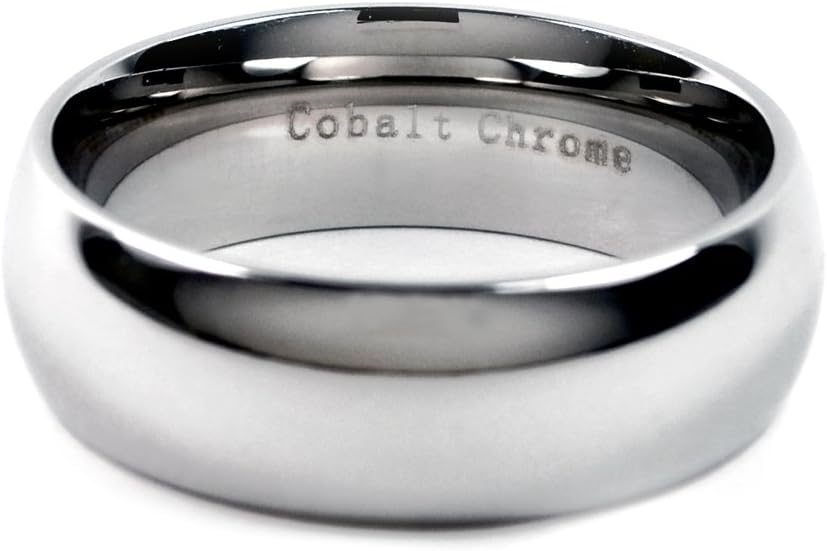
Accents
$39.99
In stock on Amazon
Check price on AmazonThe Decision Rule
If you’ve read this far, you probably already know which metal is yours. Here’s the explicit if/then:
Tight budget, zero financial risk: Stainless steel 316L, $15–$60, resizable, polishable. Accept that it will scratch; know it can be touched up.
TIGRADE
$11.99
In stock on Amazon
Check price on AmazonWeight is your primary concern, or you need emergency removal to be straightforward: Grade 5 titanium, $40–$150. Lightweight, strong, and cuttable by standard emergency room tools. Finalize your size carefully — resizing up isn’t a realistic option.
King
$28.99
In stock on Amazon
Check price on AmazonScratch resistance is the top priority and you’re comfortable with an exchange-program model: Tungsten carbide from a brand with a documented lifetime exchange policy. Under $150 for most styles. Read the brittleness caveat honestly against your daily environment.
King
$28.99
In stock on Amazon
Check price on AmazonNear-tungsten scratch resistance with better shatter tolerance and a white-metal look: Cobalt chrome, $80–$200. The under-discussed middle option that deserves more attention than it typically gets in buyer guides.
King
$28.99
In stock on Amazon
Check price on AmazonInvesting in a one-of-a-kind piece where the visual story matters as much as the metal properties: Damascus steel from a specialty jeweler. Budget $200 minimum; expect a real conversation about alloy composition, finish, and care before you commit.
Accents
$39.99
In stock on Amazon
Check price on AmazonOne final note on insurance: Jewelers Mutual, in its guidance document “Insuring Alternative Metal Rings,” notes that standard homeowners policies often cover loss but not the manufacturing exchange costs specific to non-resizable metals. A standalone jewelry floater policy — typically $1–$2 per $100 of ring value annually — is worth considering for any band above $150, regardless of material. The Knot, in its “Wedding Band Metals Guide,” echoes this point, recommending jewelry-specific coverage as a standard step for any ring purchase, not just precious metals.
The metal you choose is the one that fits your life, not the one that sounds most impressive in a spec list. Now you have the spec list. Make it yours.