April 28, 2026 • Mara Voss • 9 min reading time • Prices verified June 5, 2026
Stainless Steel CZ and Stone-Set Rings: Honest Expectations for Simulated Diamond Buyers
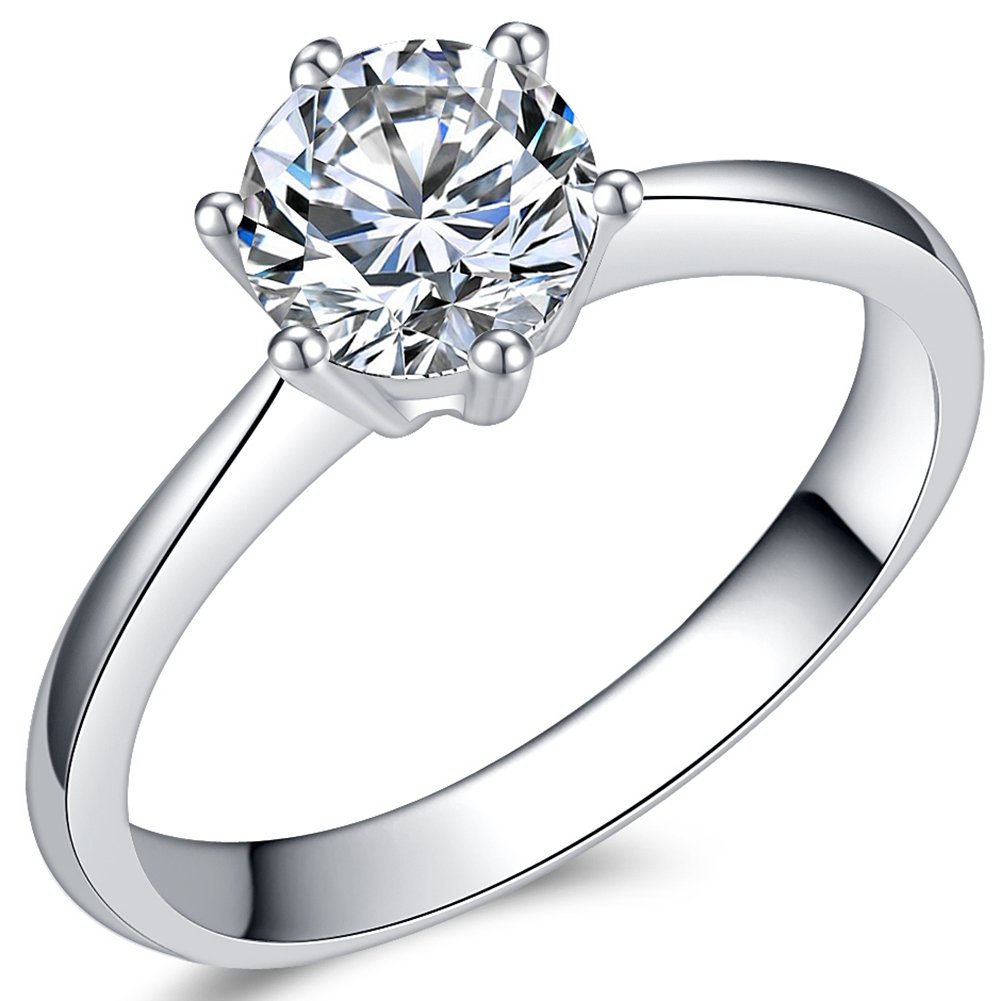
If you’ve landed here wondering whether a stainless steel ring set with a cubic zirconia — “CZ” for short, a man-made stone engineered to mimic diamond’s sparkle — is a smart buy or a compromise you’ll regret, the honest answer is: it depends on what you’re optimizing for. Cubic zirconia is a lab-created crystal (zirconium dioxide, if you want the chemistry) that refracts light in a way that looks, to most eyes in most lighting, very close to a natural diamond. Stainless steel is an iron alloy hardened with chromium and typically nickel, used in everything from surgical instruments to kitchen sinks — and increasingly in wedding and engagement rings because it’s durable, hypoallergenic in its higher-grade forms, and dramatically cheaper than gold or platinum. This article is for buyers who have already moved past “is CZ worth it?” and want a realistic picture of exactly what they’re getting — and giving up — when they set a simulated stone into a steel band.
What CZ Actually Is — and How It Ages in a Steel Setting
The GIA’s cubic zirconia education overview describes CZ as a synthesized crystalline form of zirconium dioxide, first mass-produced for jewelry in the 1970s. On the Mohs hardness scale — a 1-to-10 measure of how resistant a mineral is to being scratched by another material — CZ scores 8 to 8.5. That sounds strong, and in isolation it is. The problem is context: natural diamond is a 10, meaning essentially nothing in daily life scratches it. At 8 to 8.5, CZ will accumulate surface micro-abrasions from dust, quartz particles in everyday grit, and even some synthetic cleaning products. Those abrasions don’t shatter the stone; they gradually cloud it, turning what was once a brilliant, glassy surface into something that looks milky or dull under direct light.
How fast does that clouding happen? It varies enormously by lifestyle. Brides’ overview of cubic zirconia notes that stones worn daily in active environments — hands regularly in water, grit, or cleaning agents — can begin to show noticeable hazing within two to five years. Buyers who wear rings occasionally or in low-contact settings report stones holding their appearance much longer.
The steel setting itself introduces its own timeline. Unlike prong settings in gold or platinum, stainless steel prongs resist bending — which sounds like an advantage until you realize that metal flexibility is partly what allows a jeweler to re-tighten a prong around a loose stone. A rigid steel prong that begins to fatigue can crack rather than flex back into place, which can eventually release the stone entirely. Across aggregated buyer reviews on specialty retail sites, stone loss from prong fatigue — not stone breakage — is the most commonly cited failure mode in steel-set CZ rings worn for more than three to four years.
The Cost-Clarity Trade-Off: By the Numbers
Here’s the financial landscape as of mid-2026:
| Option | Typical Price Range | Expected Appearance Lifespan (daily wear) |
|---|---|---|
| Stainless steel + CZ solitaire | $15 – $80 | 2 – 5 years before visible hazing |
| Sterling silver + CZ solitaire | $30 – $150 | Similar stone lifespan; metal tarnishes faster |
| Stainless steel + lab-grown moissanite (Mohs 9.25) | $80 – $250 | 8 – 15+ years; significantly harder stone |
| 10K gold + CZ | $150 – $400 | Metal outlasts the stone |
| Lab-grown diamond in gold/platinum | $400 – $2,000+ | Indefinite with normal care |
National Jeweler’s 2025 market update noted that lab-grown diamond prices have dropped roughly 60–70% from 2021 peaks, meaning a 1-carat lab-grown diamond in a simple gold solitaire now routinely clears at under $600 at mid-market jewelers. That collapse in lab-grown pricing has materially changed the decision calculus for CZ buyers: the price gap between “simulated stone” and “actual diamond (lab-grown)” is narrower than it has ever been.
The Knot’s 2025 Real Weddings Study found that average jewelry spend for engagement rings among respondents was approximately $5,900 — but the distribution is heavily skewed by high spenders, and the median is considerably lower. A meaningful share of couples surveyed reported intentionally choosing alternative-stone or alternative-metal rings at $500 or below, treating the ring as a placeholder or value statement rather than a permanent heirloom.
What the Steel Setting Gets Right (and Where It Falls Short)
Steel’s real advantage in a stone-set ring is corrosion resistance and structural rigidity. Surgical-grade 316L stainless steel — the alloy most responsible retailers use for wearable rings — resists tarnish, doesn’t react with sweat or water, and won’t deform under normal daily pressure. For buyers who work in environments where gold or silver would scratch, oxidize, or require regular polishing, steel is a legitimate material choice, not just a budget concession.
JCK Online’s coverage of alternative metals in bridal has consistently noted, though, that steel’s rigidity creates a resizing problem: most steel bands cannot be resized after purchase. This matters more for stone-set rings than for plain bands, because a ring worn on the wrong finger size puts stress on the setting geometry, which accelerates prong fatigue. If you order a steel CZ ring and your size is off by more than a half step, the practical options are limited: wear it loose (risky for prong integrity), wear it tight (uncomfortable and potentially harder to remove in a medical setting), or replace it.
The nickel content in lower-grade stainless steel is worth flagging for buyers with sensitive skin. 316L surgical steel contains about 10–14% nickel by composition, but the chromium oxide layer on the surface dramatically reduces nickel ion release under normal conditions. EU Nickel Directive limits, which many premium steel ring producers voluntarily follow even in the U.S. market, cap nickel release at 0.5 micrograms per square centimeter per week for skin-contact jewelry. Rings marketed as “surgical steel” without a specified alloy grade — often found in the $10–$25 range — may not meet that standard. If you or your partner have a confirmed nickel sensitivity, verify the alloy is 316L or higher before buying.
Decision Framework: If X, Then Y
By this point you have enough information to structure the actual decision. Here’s how to apply it:
If your budget is genuinely under $50 and the ring is a placeholder — for an engagement, a travel ring, or a low-stakes commitment token — a stainless steel CZ ring is a rational choice. You’re not buying a heirloom; you’re buying a symbol that functions for a defined period. Buy it knowing the stone will eventually haze and plan for replacement rather than repair. Prioritize sellers that specify 316L steel and have a clear exchange policy.
If your budget is $80–$200 and you want sparkle that lasts, shift from CZ to moissanite (silicon carbide, Mohs 9.25). Published specs put moissanite’s hardness meaningfully closer to diamond, and its light dispersion is actually higher than diamond — meaning it produces more rainbow-colored fire, which some buyers love and others find “too much.” Moissanite in a stainless steel or cobalt chrome setting at this price point represents a significantly better long-term value than CZ at any price.
If you’re buying a stone-set ring as an engagement ring intended to be worn daily for decades, the honest recommendation is to step up to a lab-grown diamond in a gold or platinum setting. As of mid-2026, per National Jeweler’s pricing data, a 0.75–1.0 carat lab-grown diamond in a 10K gold solitaire is accessible at $400–$700 from reputable retailers. The stone will not haze. The setting can be resized. And it will be insurable under a standard jewelry policy — Jewelers Mutual’s ring insurance guidance notes that simulated stones in steel settings are often ineligible for full replacement-value coverage under standard jewelry floaters, which is a non-trivial practical consideration.
If you’re buying a matching set for both partners and aesthetics matter more than stone quality, steel’s consistency of finish is genuinely useful. Matching brushed-steel or black-PVD-coated bands with flush-set CZ accents — where stones are recessed into channels rather than held by prongs — solve the prong-fatigue problem and let the coordinated design take the visual lead. Channel-set and bezel-set (a style where the stone is surrounded by a rim of metal rather than raised prongs) configurations protect the stone’s girdle — its outer edge — from impact and reduce the odds of stone loss significantly compared to prong settings.
If you or your partner is an active-lifestyle wearer — surgeon, tradesperson, athlete — the ring insurance gap noted above matters practically. A tungsten or cobalt chrome plain band with no stone set is the better daily-wear choice. Keep the CZ ring for occasions when the hands aren’t at risk. Plain steel and tungsten bands at this tier can be had for $30–$80 and survive conditions that would destroy any stone-set ring regardless of metal quality.
One Underrated Variable: Seller Policy
The most important differentiator among stainless steel CZ ring sellers is not the stone or the alloy — it’s the exchange and replacement policy. Because these rings are expected to have finite appearance lifespans, sellers who offer free or low-cost exchanges within a defined period (90 days to one year is common) provide materially more value than sellers with identical products and no-return policies. Before purchasing:
- Confirm the alloy grade (316L at minimum).
- Ask whether the stone is glued or prong/bezel set — glued stones have no mechanical retention and should be avoided.
- Verify what the policy covers if a stone falls out within the first year.
- Check whether the ring is sold with a box or certificate that documents the stone type — this matters if you ever attempt to insure it or resell it.
Stainless steel CZ rings occupy a real and legitimate market niche. They’re not pretending to be something they aren’t — or rather, they shouldn’t be. The buyers who are happiest with them are the ones who understood the trade-offs going in: brilliant appearance at a low price, with a finite window before the stone needs replacing. That’s a fair exchange. The buyers who feel burned are usually the ones who expected permanence they were never offered.