April 26, 2026 • Mara Voss • 9 min reading time • Prices verified June 5, 2026
Stainless Steel Wedding Bands Under $30: What the Spec Sheets Actually Tell You
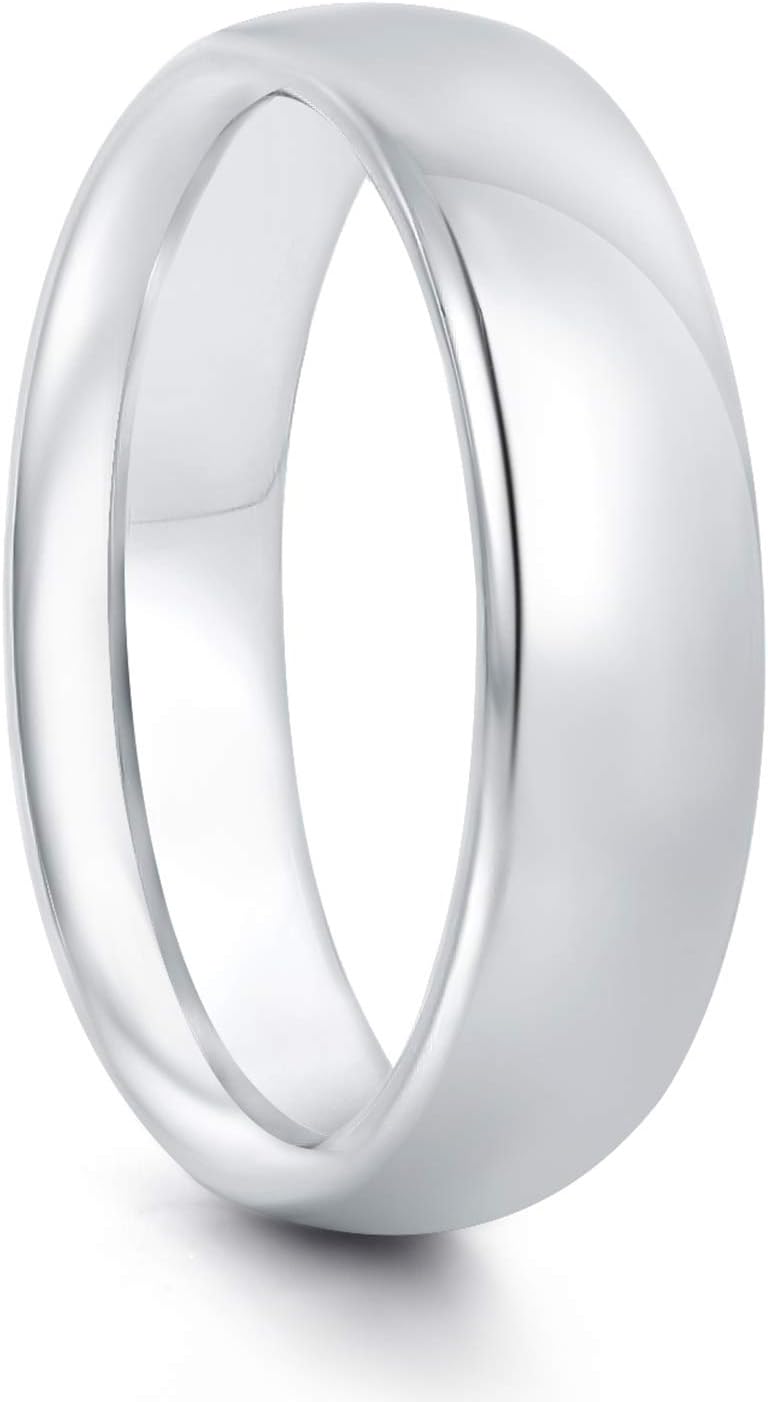
A stainless steel wedding band is exactly what it sounds like: a ring made from a steel alloy (steel is iron mixed with other elements) that has been engineered to resist rust and corrosion. The “stainless” property comes from chromium — a metallic element blended into the steel at a minimum of 10.5% by weight — which creates an invisible oxide layer on the surface that self-repairs when scratched. In plain terms: unlike bare iron, it doesn’t rust when it gets wet, and it doesn’t require the same level of daily babying that gold or silver does. Wedding bands in this category typically land between $10 and $30 at retail, making them the most accessible entry point in the entire alternative-metal ring market. If you’re shopping in this range — or advising a partner, sibling, or client who is — this guide will tell you exactly what you’re getting, what you’re giving up, and where the actual decision points live.
The Grade Question: 316L vs. 304 and Why It Matters More Than the Price Tag
Walk through any budget ring listing and you’ll see two numbers appear constantly: 316L and 304. These are alloy grades — standardized recipes for the steel’s composition, set by the American Iron and Steel Institute (AISI). Understanding the difference is the single most important piece of technical literacy in this price segment.
304 stainless steel (also labeled 18/8, meaning 18% chromium, 8% nickel) is the workhorse grade used in kitchen appliances, sinks, and flatware. It’s corrosion-resistant in normal indoor conditions and perfectly serviceable as a ring. The Nickel Institute’s guidelines on nickel release note that 304 alloys can release measurable nickel ions under prolonged skin contact combined with sweat or acidic environments — which is exactly the condition a ring worn 24/7 creates.
316L stainless steel (sometimes labeled 18/10 or surgical steel — though “surgical steel” is a marketing term, not a regulated grade designation) adds molybdenum to the formula and drops the carbon content, which is what the “L” stands for (low carbon). The practical result: significantly lower nickel ion release and stronger resistance to chloride corrosion — the kind that happens when you wear a ring in a pool, ocean, or sweaty gym session. GIA’s editorial on metal choices for wedding bands confirms that 316L is the recommended minimum grade for skin-contact jewelry intended for continuous wear.
The decision rule here is simple: if a listing doesn’t specify the grade, assume 304 at best, mystery alloy at worst. Reputable sellers in this price range — including Amazon’s own-brand basics and established Etsy sellers with verified reviews — will state 316L explicitly in the product title or first bullet point. If it’s not there, ask before buying.
Hardness: What the Mohs Scale Tells You About Daily Wear
Mohs hardness (a 1–10 scale measuring scratch resistance, where diamond is 10 and your fingernail is about 2.5) puts stainless steel at roughly 5.5–6.5, depending on grade and finish. For comparison, tungsten carbide sits at 8.5–9 and gold at 2.5–3.
By the numbers:
| Material | Mohs Hardness | Vickers Hardness (HV) | Scratch Resistance |
|---|---|---|---|
| Stainless Steel (316L) | ~5.5–6.5 | ~150–200 HV | Moderate — will show wear marks |
| Tungsten Carbide | ~8.5–9 | ~1,400–1,800 HV | Very high |
| 14k Gold | ~2.5–3 | ~120–140 HV | Low |
| Titanium (Grade 23) | ~6 | ~300–400 HV | Moderate-high |
The honest translation: a stainless steel band at $20 will accumulate surface scratches over months of daily wear, especially if you work with your hands. A high-polish finish will show those scratches most visibly; a brushed or matte finish will mask them more gracefully because the grain already breaks up light. This is not a defect — it’s physics. The JCK Online Alternative Metal Trends Report notes that stainless steel’s lower hardness relative to tungsten is one of the primary reasons the category occupies a different market tier, even among budget buyers.
The flip side — and this is a genuine advantage over tungsten — is that stainless steel bends under extreme pressure rather than shattering. Emergency room removal is straightforward with standard ring-cutter tools. If you’re a surgeon, a first responder, or anyone else for whom ring removal in an emergency is a real scenario, that property matters.
What “Hypoallergenic” Actually Means at This Price Point
The word “hypoallergenic” appears in virtually every sub-$30 stainless steel listing. It is not a regulated term — no government body certifies a ring as hypoallergenic before it can be marketed that way. What it signals, when used responsibly, is that the alloy is formulated to minimize allergic reaction risk.
The relevant mechanism is nickel sensitivity, which the Nickel Institute estimates affects roughly 10–20% of the population, with higher prevalence among women due to cumulative sensitization from jewelry and piercing exposure. The concern isn’t nickel’s presence in the alloy per se — 316L contains approximately 10–14% nickel by weight — but the rate at which nickel ions migrate through the oxide layer and contact skin.
Properly finished 316L, with an intact chromium oxide barrier, releases nickel well below the European Union’s REACH regulation threshold of 0.5 micrograms per square centimeter per week for items in prolonged contact with skin. That’s the benchmark worth knowing. The practical implication: if a seller claims hypoallergenic without specifying 316L grade and proper finishing, they’re using the word decoratively. If they specify 316L and name the EU REACH standard as their benchmark, that’s a meaningful claim.
If you already know you have a nickel sensitivity, stainless steel is a reasonable option in 316L — but titanium Grade 23 (which contains zero nickel) is the safer choice and available in the same sub-$50 price range.
Finish, Fit, and the Hidden Cost of “Free Sizing”
At under $30, most stainless steel bands are sold in fixed integer sizes (7, 8, 9…) with no resizing service included. This matters because stainless steel cannot be resized — the metal’s hardness and the economics of labor make it impractical. A ring that doesn’t fit has to be exchanged or replaced entirely. Good Housekeeping’s buying-on-a-budget guidance highlights return and exchange policy as the single most important pre-purchase check for alternative-metal rings, and that advice applies directly here.
Before purchasing, confirm:
- The seller’s exchange window (30 days minimum; 60 is better)
- Whether exchange shipping is covered
- Whether they stock half sizes — budget sellers often don’t, and a half-size fit is noticeably different from a poor whole-size fit
Comfort fit vs. flat fit: A comfort-fit band (described in listings as “comfort fit,” “dome interior,” or “court shape”) has a rounded interior that reduces the contact area between ring and finger. Flat-fit bands have a squared-off interior and sit flatter against the skin. If you’re wearing a ring all day and have never worn one before, most wearers — per aggregated buyer reviews across The Knot’s ring forums and independent retailer review sections — report comfort-fit as noticeably more wearable after the first week of break-in.
Width: Sub-$30 bands typically run 4mm to 8mm wide. 6mm is the statistical center of the market for bands worn as primary wedding rings. Wider bands (8mm+) require sizing up by approximately a half size to account for fit over the knuckle — a detail many first-time buyers miss and many budget listings don’t flag.
Coordinated Sets at This Price Point: What Actually Matches
For couples shopping matching sets under $30 — a high-intent segment that The Knot’s buying guide identifies as one of the fastest-growing in alternative metals — the practical challenge is finish consistency. Two bands ordered separately, even from the same seller, may have slightly different polish depths or brushing directions if they came from different production runs.
The safer strategy: order both bands simultaneously from a single listing that explicitly sells them as a set, rather than ordering two individual rings separately. Sellers who photograph the pair together in their listing imagery have typically already QC’d for visual consistency. Sellers who list men’s and women’s variants as separate SKUs with the same finish description have not necessarily done this.
Width coordination between partners’ bands is a design choice, not a rule. A common approach is a 4mm band paired with a 6mm or 8mm, which reads as clearly coordinated without being identical — relevant for couples who want visual cohesion without matching silhouettes.
The Decision Frame: If X, Then Y
If you’ve read the spec sheets and are sitting with a purchase decision, here’s the honest filter:
If your primary driver is price and you have no known nickel sensitivity: A 316L stainless steel band from a seller who states the grade explicitly, offers a 30-day exchange, and photographs the finish clearly is a defensible everyday wedding band. Owners consistently report satisfaction with brushed-finish bands in this tier for 2–5 years of regular wear before deciding whether to upgrade.
If you work with your hands daily (trades, kitchen, outdoor labor): Expect surface wear marks within 6–12 months on a high-polish finish. Choose brushed or satin — the scratches disappear into the texture rather than announcing themselves. Plan for replacement rather than preservation.
If you have a confirmed nickel allergy: Move to titanium Grade 23 or cobalt chrome in the same price range. The 316L tradeoff isn’t worth the risk.
If you’re buying a matching set and visual consistency matters: Buy both rings from the same listing, at the same time, from a seller with a return window that covers you if one piece arrives visually off.
If this is a placeholder ring (travel, active lifestyle, “leave the real one at home”) rather than a permanent daily band: the under-$30 stainless segment is exactly what it’s designed for. Owners in this use case frequently report buying two or three at a time as interchangeable backups — which, at $15–$25 per band, is a mathematically sensible approach.
The under-$30 stainless steel band isn’t a compromise if you understand what it is: a durable, corrosion-resistant, non-precious metal ring that will show its wear history honestly and cannot be resized. Know the grade, read the exchange policy, choose the right finish for your lifestyle, and it delivers exactly what the spec sheet promises.