June 2, 2026 • Mara Voss • 9 min reading time • Prices verified June 5, 2026
Gold-Tone Tungsten Bands: What '14K Gold Plated' and '24K Gold Plated' Actually Mean on a $30 Ring
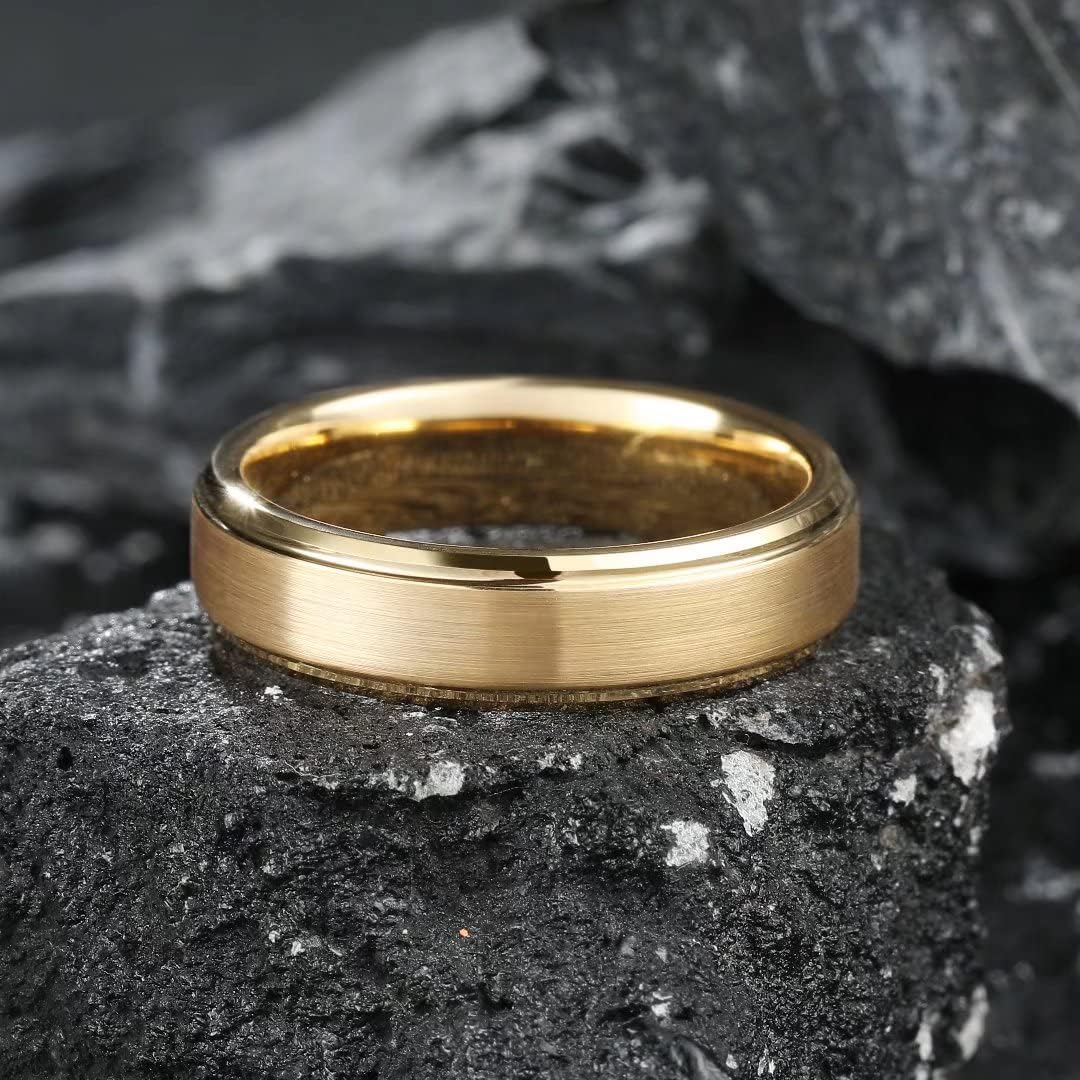
If you’ve been shopping for a wedding band and landed on a tungsten ring listed as “24K gold plated” for $28, you’ve probably asked yourself some version of the same question: what does that actually mean? Let’s back up for a second. Tungsten carbide — the base metal in most of these rings — is an extremely hard, silvery-gray industrial compound (think drill-bit material). It’s durable, scratch-resistant, and hypoallergenic in its pure form. Gold plating means that a microscopically thin layer of actual gold has been deposited on the outside of that tungsten ring using an electrochemical process called electroplating. The “14K” or “24K” label tells you the purity of the gold used in that layer — not how thick it is, not how long it lasts, and definitely not how much gold is actually on the ring. This article breaks down what those karat markings mean in practice, why the plating thickness number matters far more than the karat number on a budget tungsten band, and how to set realistic expectations before you spend $30 — or $150 — on a gold-tone ring you plan to wear every day.
| EDITOR'S PICKKing Will Men's Women's Tungste… | Mid-tier[King Will Tungsten Carbide Wedd…](https://www.amazon.com/dp/B06XYRLNCP?tag=greenflower20-20) | Budget pick[TRUMIUM 2mm 4mm 6mm 8mm Tungste…](https://www.amazon.com/dp/B09HWR2R31?tag=greenflower20-20) | |
|---|---|---|---|
| Gold layer | 24K gold plated | 14K gold plated | Gold plated |
| Width | 8mm | 4/6/8mm | 2/4/6/8mm |
| Finish | Domed polished | Matte brushed & high polish | Domed high polish |
| Fit | — | Comfort fit | Comfort fit |
| Price | $29.99 | $28.99 | $17.99 |
| See on Amazon → | See on Amazon → | See on Amazon → |
What “14K” and “24K” Actually Describe — and What They Don’t
The karat system (abbreviated K or kt) measures gold purity on a scale of 24 parts. Pure gold is 24K — meaning 24 out of 24 parts are gold. 14K means 14 out of 24 parts are gold (roughly 58.3% purity), with the remaining parts being alloying metals such as copper, silver, or zinc. Per the GIA’s published guidance on metal quality marks, karat stamps exist to tell you the composition of a gold alloy — they were designed for solid gold jewelry, where the proportion matters throughout the entire piece.
When a retailer labels a tungsten ring “14K gold plated,” the karat number is describing the purity of the gold used only in the plating solution, not anything about the ring’s durability, longevity, or gold content by weight. The tungsten carbide core — which is 99%+ of the ring’s mass — contains no gold at all.
Here’s the practical implication of the purity difference:
- 24K plating uses pure gold. It has a richer, warmer yellow tone and is softer (pure gold is relatively malleable). Because it contains no hardening alloys, 24K plated surfaces can wear through more quickly under friction.
- 14K plating uses a gold alloy. The alloying metals make the surface microscopically harder and can extend wear life slightly — but the color is slightly less saturated. Some rose-gold finishes use a copper-rich 14K alloy specifically to achieve that pink tone.
- 18K plating splits the difference: warmer color than 14K, marginally harder than 24K. It’s the most common finish on mid-range gold-tone tungsten bands from brands like Triton and Benchmark.
What the karat label tells you almost nothing about is how thick the plating is — and thickness is the variable that actually governs how long your finish lasts.
The Number That Actually Matters: Plating Thickness
Electroplated coatings are measured in microns (one micron = one-millionth of a meter). The Jewelers of America, in their published consumer guidance on gold plating, identify several industry-standard thresholds:
By the numbers — standard plating tiers:
| Label | Minimum thickness | Typical durability on daily-wear ring |
|---|---|---|
| Gold plated | 0.175 microns | Weeks to a few months |
| Gold electroplate | 0.175 microns | Weeks to a few months |
| Heavy gold electroplate | 2.5 microns | 1–3 years with moderate wear |
| Gold filled / rolled gold | 1/20 gold by weight, bonded | 10–30 years |
Most tungsten bands sold under $50 — especially on marketplace platforms — are plated at or near the minimum 0.175-micron threshold. At that thickness, the gold layer is invisible to the naked eye. It’s thinner than a human hair by a factor of roughly 350. The JCK Online analysis of alternative metals in the bridal market notes that budget gold-tone tungsten rings routinely use flash-plating at this minimum spec, which delivers the correct visual appearance immediately after manufacture but offers limited wear resistance.
The practical outcome: the areas of highest friction — the inner shank where the ring contacts your finger, and the outer edges where it contacts surfaces — will show the underlying silver-gray tungsten within weeks to months under normal daily wear. The top face of the ring (the part you see in photos) often holds the plating longest because it experiences less contact friction.
Bands priced at $80–$150 from established brands frequently specify 2–3 micron plating in their product documentation. That’s still a surface treatment, not a material transformation, but reviewers and owners consistently report two-plus years of maintained finish before visible wear appears on those pieces, provided the wearer avoids harsh chemicals and abrasive surfaces.
Rose Gold and Black Finishes: The Same Mechanism, Different Chemistry
Rose gold plating on tungsten follows the exact same electroplating process — the pink color comes from a copper-rich gold alloy (typically 18K with a high copper ratio) in the plating bath. The Knot’s published guide on tungsten wedding bands notes that rose gold tungsten is one of the fastest-growing finish choices for couples shopping matching sets, particularly LGBTQ+ couples and non-traditional shoppers who want warmth without the conventions of yellow gold.
Durability-wise, rose gold plating on tungsten behaves identically to yellow gold plating at equivalent thickness. If a ring is listed as “rose gold plated” without a micron specification, assume minimum thickness and plan accordingly.
Black tungsten — which you’ll often see advertised alongside gold-tone options — is a different surface treatment entirely. Most black tungsten gets its color from either a DLC (Diamond-Like Carbon) coating, a zirconium nitride (ZrN) coating, or, in budget cases, simple black ion plating. DLC coatings are significantly more durable than gold plating and can withstand years of daily wear. Zirconium nitride falls in between. Standard black ion plating behaves similarly to gold plating at minimum spec — it’s a cosmetic surface, not a hardened layer.
The distinction matters because some listings bundle black and gold-tone finish options on the same product page without differentiating the coating technology, implying equivalent durability. National Jeweler’s coverage of tungsten finish durability calls this out as a common source of buyer confusion: the base metal is the same, but the coatings are not interchangeable in terms of wear life.
What “Hypoallergenic” Means Once You Add Plating — and When It Stops Applying
Tungsten carbide in its pure, uncoated form is generally considered hypoallergenic and is frequently recommended for nickel-sensitive buyers. This is one of its genuine advantages over stainless steel, which may contain nickel. However, the alloy metals in gold plating — particularly the copper, silver, and nickel sometimes present in 14K and 18K plating alloys — can become relevant once the plating at the inner shank wears through.
Per the GIA’s published guidance on metal quality marks: a gold karat stamp does not guarantee nickel-free composition. Some 14K plating formulations used in budget jewelry manufacturing contain nickel as a hardening agent. If a buyer is specifically nickel-sensitive, the relevant specification to request is whether the plating alloy itself is nickel-free — not just whether the base metal is.
Once plating on the inner shank wears away (often the first area to go), the skin is in contact with the base tungsten carbide again, not the plating — so sensitivity risk returns to the baseline tungsten profile for most buyers. The transitional period, when partially worn plating is flaking, presents the highest alloy-contact risk for sensitive skin.
The Decision Framework: If X, Then Y
You’ve seen the mechanics — here’s how to convert that into a purchasing decision.
If your budget is under $50 and you want a gold-tone look for a specific occasion (engagement party, commitment ceremony, placeholder band): A flash-plated tungsten ring at this price point is a legitimate choice. Go in knowing the finish is cosmetic and will show wear at contact points within months. It’s not a flaw — it’s the correct expectation for the product category. Look for sellers who specify at least 0.5 microns in their product listing; anything listed without a thickness spec is almost certainly minimum flash plate.
If you want the gold-tone finish to last 2+ years of daily wear: Your minimum viable spend is approximately $80–$120, from a brand that publishes a plating thickness of 2 microns or more and offers a finish warranty or replacement policy. Triton and Benchmark both publish product specifications for their tungsten lines through authorized jewelers, and their mid-range gold-tone pieces are consistently reported by owners to hold finish for 2–3 years under normal conditions. Check the warranty terms specifically for plating — some cover manufacturing defects only, not wear.
If you’re nickel-sensitive: Request written confirmation that the plating alloy is nickel-free before purchasing any gold-tone band under $100. At higher price points from established brands, this specification is typically available in product documentation.
If you want matching gold-tone sets for two: Budget for two rings at the same tier and from the same production run if possible — color consistency across pieces from different batches can vary slightly with plated finishes. For couples where one partner’s ring sees heavier daily friction (trades, manual work, outdoor activities), consider specifying the heavier-wear partner’s ring in plain polished tungsten and matching the design profile rather than the finish — coordinated silhouette, different surface treatment.
If you’re commissioning a $200+ band and want a gold-tone look that rivals solid gold: Consider whether a tungsten base is the right chassis. At that investment level, solid 10K or 14K gold, gold-filled designs, or yellow-toned cobalt chrome may deliver better long-term value than a plated surface on an otherwise-indestructible base. The JCK Online coverage of alternative metals in the bridal market specifically flags this tier as one where buyers often conflate “gold-plated tungsten” with fine jewelry performance — the base metal and the finish are telling two different stories.
The marketing language around gold-tone tungsten rings is genuinely confusing because it borrows the karat vocabulary of solid gold without the context that makes those numbers meaningful. The karat tells you purity; the micron count tells you performance. On a $30 ring, the second number is the one that governs your experience — and it’s almost never printed on the listing.